US Distribution — 1,400 Stores, 14 DCs
A US national retailer operating 1,400 stores from 14 distribution centres was paying more in transportation than its network design justified — and was over-exposed to single-DC disruptions.
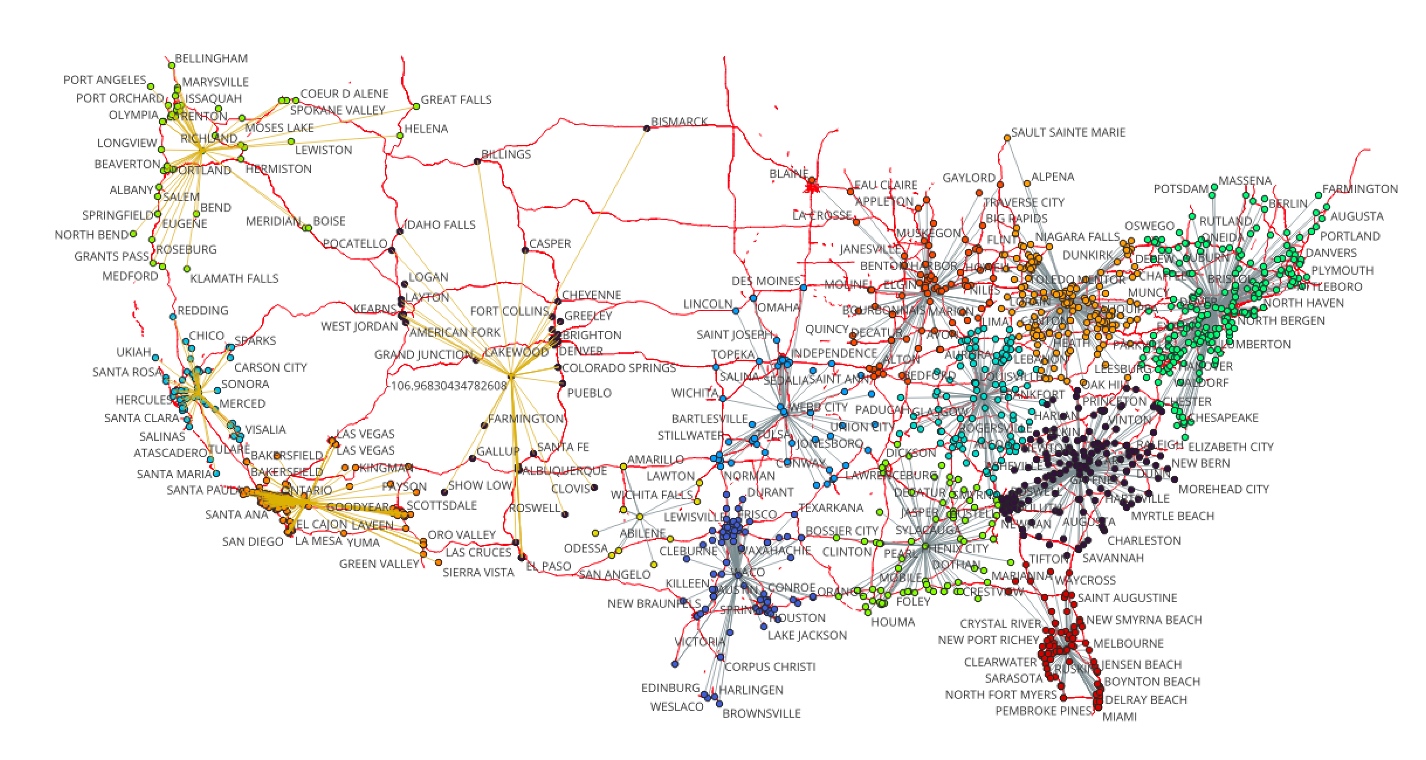
ARTEMIS Logistics: load-consolidation analysis across DC pairs surfaced ~30% transportation savings opportunities. K-means clustering on store demand identified new DC siting candidates at Mansfield, Holyoke, Waco, Vancouver WA, Indio, and Grand Junction.
A roadmap that quantified both immediate consolidation savings and the network-redesign capex/opex tradeoff for new DC siting — with disruption-resilience modeled for each option.
- ~30% transportation savings identified
- K-means DC siting analysis
- 6 new DC candidates surfaced
- Disruption-resilience modeled per option
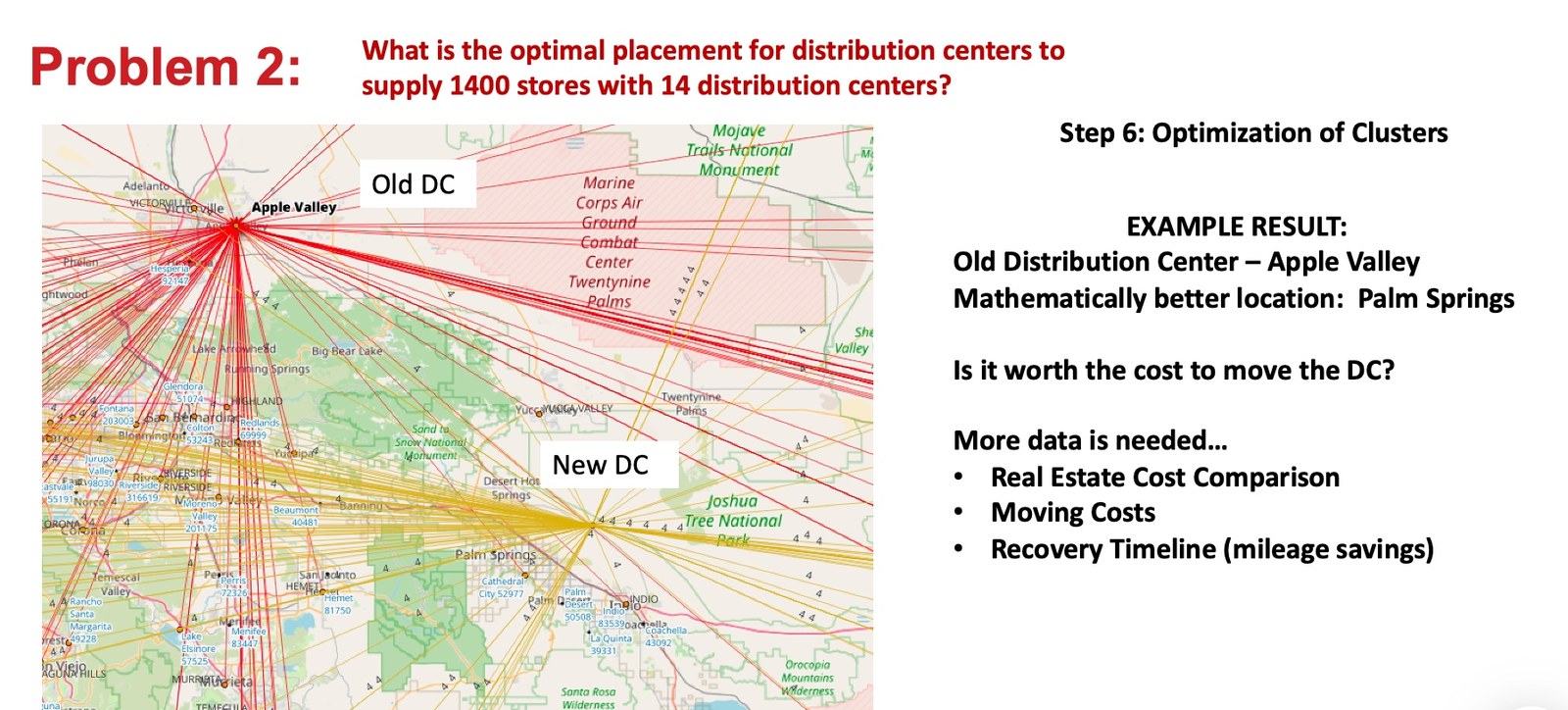
Optimal DC placement — Apple Valley vs. Palm Springs
Step 6 of the K-means workflow re-solves each cluster centroid against its served stores. In the Southern California cluster, the legacy DC in Apple Valley is geometrically off-centre — the mathematically optimal centroid sits near Palm Springs, which would shorten weighted store-miles for the cluster. The model surfaces the candidate; the business decision (real-estate cost, moving cost, recovery timeline on mileage savings) then determines whether the move is worth executing.